A finer finish
changes everything.
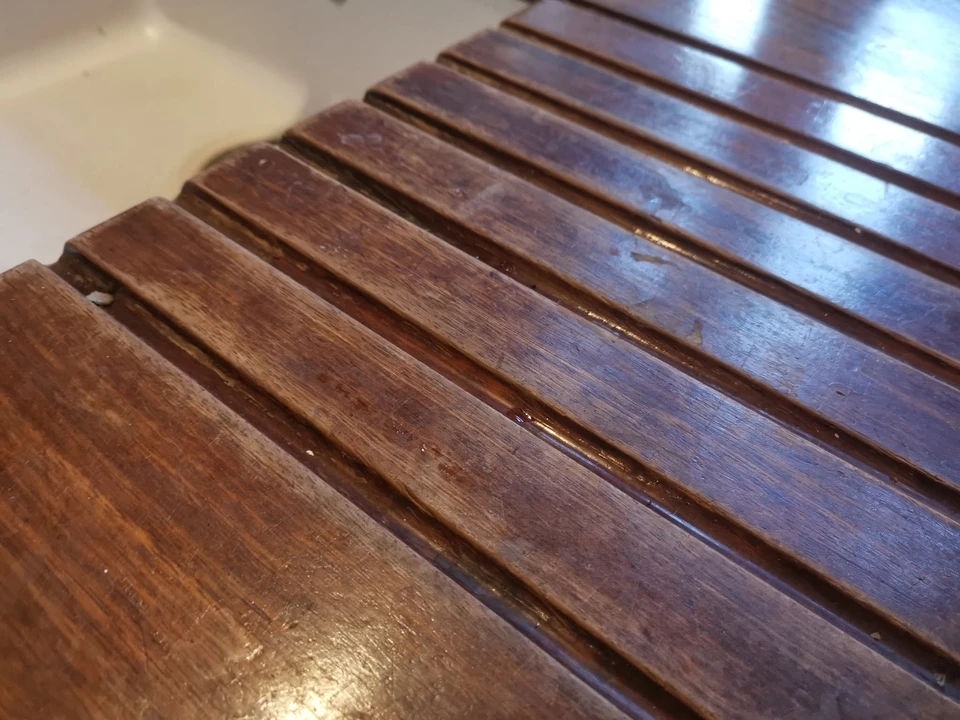
From dull, tired coatings to scratches and water marks, the right refinishing approach can bring the natural character of timber back into focus.
More than just an attractive finish.
The most successful refinishing begins with honest inspection of the damage and the type of surface.
Scuffs & scratches
Surface wear can often be carefully sanded and refinished, subject to the depth of the damage.
Staining & water damage
We assess whether marks are within the old coating or have penetrated the wood itself.
Old varnish & oil
Where appropriate, tired finishes can be removed or prepared and replaced with a compatible coating.
Natural finishes
Oil or hardwax-oil systems can offer a tactile appearance for suitable timber and uses.
Protective coatings
Lacquer or other finishes may suit particular pieces; we will discuss trade-offs rather than use one product for everything.
Small local repairs
Minor defects and joints may be repairable. Structural damage is assessed before quotation.
Beauty matters. So does living with it.
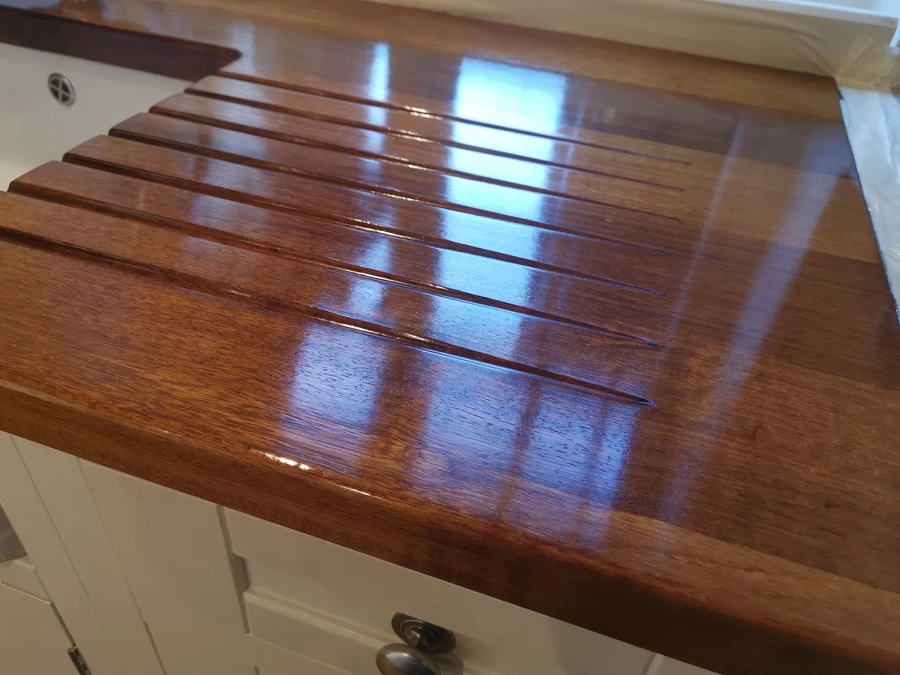
A kitchen worktop beside a sink has very different demands from a writing desk or dining table. We will discuss water resistance, food contact where relevant, appearance, curing times and maintenance before selecting a finish. Traditional French polishing is one specialist technique, but a kitchen worktop normally needs a different, more moisture-resistant finishing system.
Some deeper marks, burns, movement or previous damage cannot be made completely invisible. We prefer sensible expectations to extravagant promises.
Find out what is possibleBefore you replace it, let us look at it.
Send a few photographs and tell us what concerns you. We will give you a straightforward view of whether refinishing could be worthwhile.